
The Changing Landscape of Asian Cricket: Power, Competition and Future Challenges
एशियाई क्रिकेट भारत, पाकिस्तान, श्रीलंका, बांग्लादेश और अफगानिस्तान की राष्ट्रीय टीमों तथा आईपीएल, पीएसएल, बीपीएल और एलपीएल जैसे फ्रेंचाइजी टूर्नामेंटों से संचालित होता है। इसकी प्रमुख विशेषताएँ हैं—भारत का वित्तीय और संरचनात्मक वर्चस्व, पाकिस्तान की तेज गेंदबाजी परंपरा, अफगानिस्तान का तेज उत्थान, तथा महिला क्रिकेट का बढ़ता विस्तार। सामने की मुख्य चुनौतियाँ हैं—खिलाड़ियों पर बढ़ता मैच भार, बोर्डों के बीच राजस्व असमानता, और अंतरराष्ट्रीय कैलेंडर बनाम लीग प्रतिबद्धताओं का संतुलन।
Cricket today is one of the most popular sports in the world, and Asia is undeniably at the centre of its global gravitational pull. The national teams of India, Pakistan, Sri Lanka, Bangladesh and Afghanistan play an active role in every international format of the game. Within the framework of the Asian Cricket Council (ACC), competition among these nations has been long-standing, and that rivalry forms the core of Asian cricket identity.
India is currently the largest hub of Asian cricket. A vast audience base, a strong domestic structure and the commercially successful Indian Premier League (IPL) have given Indian cricket a distinctive place in the global sports economy. The IPL is counted among the most valuable cricket leagues in the world and has opened new career opportunities not only for Indian players but also for overseas professionals. The depth and bench strength of the Indian team are considered its greatest strength, helping it maintain continuity across long seasons and an ever-shifting schedule.
The history of Pakistani cricket is enriched by a fast-bowling tradition. Modern pacemen such as Shaheen Afridi carry this legacy forward, while under Babar Azam's captaincy the team has achieved greater stability in batting. The Pakistan Super League (PSL) has given domestic talent a platform and contributed to reviving the popularity of cricket in the country. In recent years Pakistan has also moved towards hosting international cricket, giving fresh momentum to its cricket ecosystem.
Sri Lanka and Bangladesh are two pillars of Asian cricket that have drawn the attention of the sporting world through struggle and reconstruction. Sri Lanka once won a World Cup and built recognition through technical batting and spin bowling. Bangladesh has made remarkable progress over the past two decades and is known for strong performances in home conditions. The challenge for both is the same: converting talent into consistent international performance while balancing limited resources.
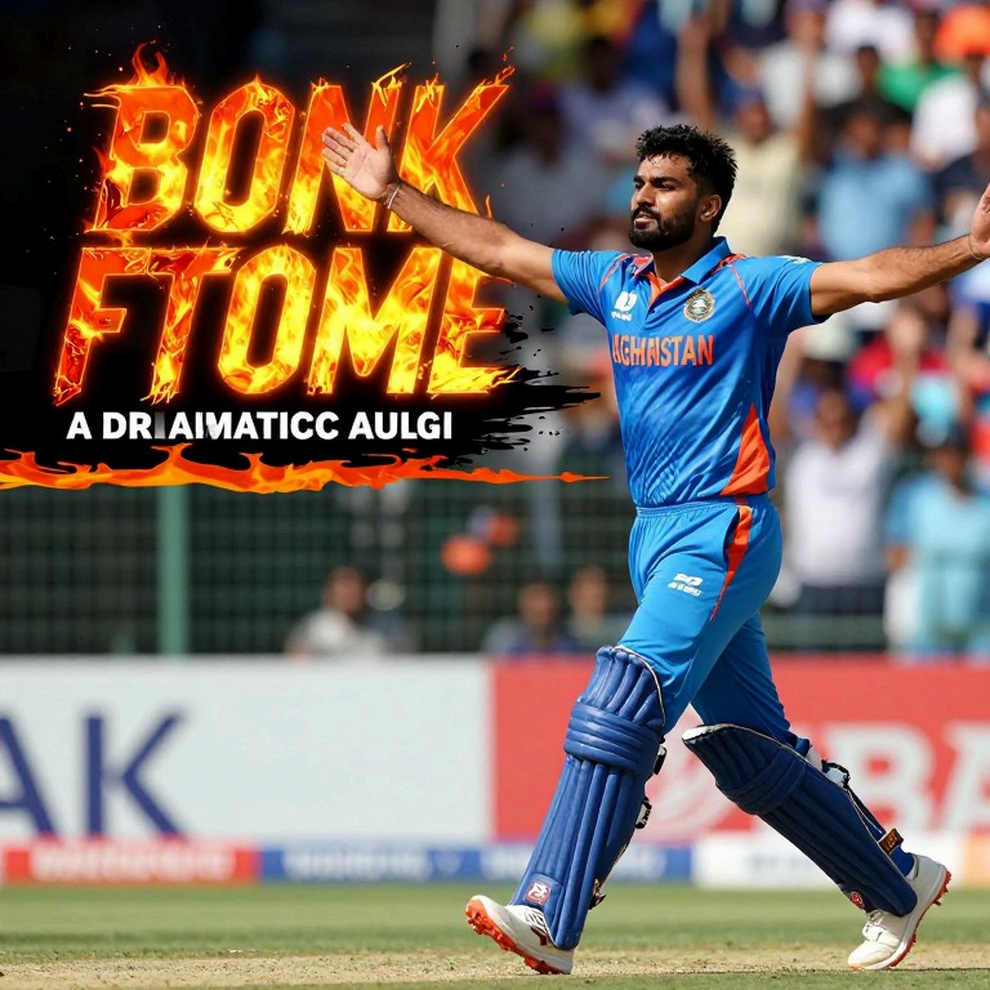
The most inspiring story of Asian cricket is that of Afghanistan. Born amid war and displacement, this team has established itself as a competitive force within just a few years. Players such as Rashid Khan not only gave Afghan cricket recognition but also secured their place in global franchise leagues. Afghanistan's spin bowling is regarded as its strongest weapon, and the team has given established sides tough fights in major tournaments. Its rise symbolises the growing depth of Asian cricket.
The expansion of franchise cricket has altered the economic and competitive equation of Asian cricket. Besides the IPL, the PSL, Bangladesh Premier League (BPL), Lanka Premier League (LPL) and other domestic tournaments offer players financial security and experience. While this has developed talent, it has also sharply increased the workload on national teams, as players must balance the international calendar with league commitments.
Challenges related to this balance are among the biggest questions facing Asian cricket. A continuously expanding match schedule puts pressure on players' physical and mental health, reflected in injuries and periodic leadership decisions. At the same time, wide disparity in cricket expenditure and revenue exists between countries. Where one board has vast financial resources, another struggles over development and basic infrastructure. In the long run this disparity could affect the balanced nature of international competition.
The growth of the women's game is another important trend in Asian cricket. Tournaments such as the Women's Asia Cup have raised both the level of competition and public interest. The Indian women's team is among the top global competitors, while the women's teams of Pakistan, Sri Lanka and Bangladesh are improving steadily. Guaranteed income and media coverage for players in women's domestic tournaments still await expansion.
In conclusion, Asian cricket today represents a unique confluence of power, talent and economic dynamism. Traditional powers such as India and Pakistan, teams rebuilding like Sri Lanka and Bangladesh, and emerging forces such as Afghanistan make this landscape multi-polar. Future success will depend on how far boards prioritise player welfare, financial balance and coordination within the global calendar. If these challenges are addressed collectively, Asia will continue to shape the direction of global cricket in the decades ahead.

संबंधित खिलाड़ी
लोकप्रिय/पसंदीदा पुस्तकें
Santner's record: most T20I wickets against India by a New Zealander after a tidy 2/24 in Auckland2026-10-31
Eden Park's 259/7: The 41-ball arithmetic and India's first-over collapse2026-10-31
Empty Input, Unwritten Report: Stage-1 Deconstruction Contains No Cricket Content2026-10-31
The Changing Landscape of Asian Cricket: Power, Competition and Future Challenges2026-10-31
Mominul's Head, a Seven-Day Date and the 34/4 Ledger: Where Paperwork Picked the Team, Not the Pitch2026-10-31
Shaheen Acknowledges Room for Improvement Ahead of ODI Tri-Series Final Against Sri Lanka as Focus Stays on Top Order and Partnerships2026-10-31
अनुशंसित
110 for Three: Shadman's Tenth Test Fifty, Shanto's Wasted Review and the Story of the Fifth Over After Lunch2026-10-29
Jaiswal's ODI Snub: A Selection-Policy Failure or White-Ball Neglect?2026-10-22
An Empty Feed Is Also a Finding: The Overs That Quietly Vanish from Domestic Cricket Data2026-10-28
Eden Park's 259/7: The 41-ball arithmetic and India's first-over collapse2026-10-31
The Empty Sheet Audit: Eight Columns, Zero Facts, and the Discipline of Not Filling the Blank2026-10-22
Starc's 6/72 and Six Balls at Newlands: How South Africa Went From 203/1 to 3292026-10-28
अनुशंसित
Kochi Mini-Auction: 27 Slots, ₹8.15 Crore and WPL’s Gap-Fill Market2026-10-29
A Headline With Nothing Under It: In Asian Cricket's Transfer Window, Verification Is the Only Currency2026-10-30
Sharjah, 32.5 Overs: Bangladesh Saved the Innings, Not the 41-Run Equation2026-10-22
The Missing Column in Abhishek Sharma's Record: The Innings Is Real, the Category Is Not2026-10-28
Rashid Khan's 200th T20I Wicket: History Written in the Ninth Over, but the Real Story Spans a Decade2026-10-30
Bengaluru's 7.4 Overs: 118/5, a Shared Trophy and an Absent Reserve Day2026-10-22
अनुशंसित
The Asia Cup's Other XI: The Calendar Gets Picked Before the Trophy2026-10-29
Sharjah Final: Afghanistan Beat Zimbabwe by 7 Wickets — 68 of Their 169 Came From One Batter2026-10-25
Kochi Mini-Auction: 27 Slots, ₹8.15 Crore and WPL’s Gap-Fill Market2026-10-29
Mumbai Indians unveil coaching staff for IPL 2027: Uthappa in as batting coach, McClenaghan replaces Malinga2026-10-31
The New Balance of Asian Cricket: A Game Stretched Between Formats, Capital and Boardroom Politics2026-10-28
Mushfiqur's Finger, Mirpur's Spin, and a Selection Still Undecided2026-10-28
अनुशंसित
Cricket Analysis on an Empty Payload: When the Pipeline Fails, Who Writes the Story2026-10-22
Uganda Above India, Bangladesh Nowhere: The T20 Win-Rate Table Is a Clause, Not a Verdict2026-10-30
U-19 Asia Cup: Before Muscat, a Ledger of Three Innings and Two Surnames2026-10-30
Wellington's 118: Not Abhishek Sharma's Record — the Powerplay Ledger Is the Real Story2026-10-29
Boland's 4/31: South Africa's Real Batting Problem Beneath the Rain in Port Elizabeth2026-10-22
The Empty Register: The Cricket Record That Was Never Written2026-10-22