
Bodø/Glimt 3-2 Viking: Both Coaches Sent Off, Cap-Pulling Flashpoint, and Parity at the Top
बोडो/ग्लिम्ट ने वाइकिंग को 3-2 से हराया, लेकिन एलिटेसीरियन तालिका में वाइकिंग ही शीर्ष पर रही क्योंकि दोनों टीमों के अंक और गोल अंतर बराबर हैं और आमने-सामने के रिकॉर्ड (सीज़न के पहले मुकाबले में वाइकिंग की 3-0 जीत) के कारण वाइकिंग आगे है। पांचों गोल पहले हाफ में हुए: चौथे मिनट में फाल्शेनर का आत्मघाती गोल, 19वें मिनट में हेल्मरसन, वाइकिंग की ओर से हाउगेन और बोथेम के दो गोल, और 43वें मिनट में हाउगे का डिफ्लेक्टेड गोल (पहले इसे आत्मघाती गोल बताया गया था, बाद में सुधार किया गया)। मैच के दौरान दोनों मुख्य कोच — बोडो/ग्लिम्ट के नटसन और वाइकिंग के जेन्सन — को रेफरी ने बाहर भेज दिया। एक कड़े टैकल के बाद झड़प हुई, जिसमें एक खिलाड़ी ने विपक्षी बेंच के सदस्य के सिर से कैप खींचकर फेंक दी। मैच के बाद केवल बोडो/ग्लिम्ट के कप्तान पैट्रिक बर्ग ने TV2 से बात की; वाइकिंग पक्ष, दोनों कोचों और रेफरी की ओर से कोई बयान उपलब्ध नहीं है। दोनों कोचों के खिलाफ अनुशासनात्मक कार्रवाई पर फैसला इस रिपोर्ट के लिखे जाने तक बाकी था।
Correction notice: This report has been amended after publication. An earlier version attributed Bodø/Glimt's third goal to a Viking own goal. It is now credited to Hauge. In the 43rd minute Hauge's shot deflected in off a defender, and the credit stands with the shooter. The correction has been applied in two places in the report so that readers are not caught out by the superseded attribution.
Five goals, two red cards and one flashpoint at Aspmyra
Bodø/Glimt beat Viking 3-2 in the Eliteserien at Aspmyra on Friday, but the scoreline does not tell the story of the evening. Both head coaches were sent from the touchline. There was a confrontation involving players and both benches. And there was an incident that dominated the conversation afterwards — a player pulling a cap off the head of a member of the opposing bench and throwing it back towards them.
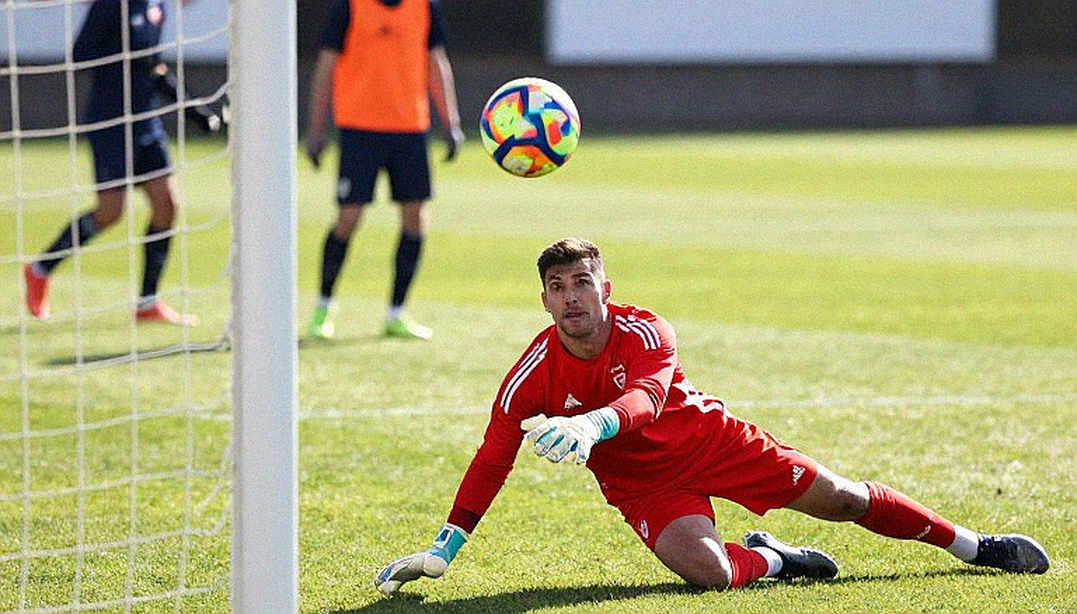
All five goals came in the first half. The second half produced no goals, no decisive shift, and no reduction in tension. At the final whistle the table showed the two clubs level on points and level on goal difference. Viking stayed top only on head-to-head record, having beaten the same opponents 3-0 earlier in the season. The team that won on Friday did not move up. The team that lost did not move down.
First half: an early blow
The opening did not go to script for the hosts — or rather it did, in the worst way. In the fourth minute the ball came off Viking defender Falchener and into his own net. An own goal. Bodø/Glimt led 1-0.
It was the kind of start that shapes these fixtures. Viking, top of the table and playing to protect that position, were suddenly behind. They did not panic.
In the 19th minute Helmersen doubled the lead. The goal came from the pressure the hosts built after the early own goal, and at 2-0 the match looked as though it might flatten out.
Viking replied. Haugen scored, and then Botheim scored. Both goals arrived inside the first half, meaning a two-goal lead had been erased within a matter of minutes. The shape of the match changed completely.
Then came the 43rd minute. Hauge struck a shot, the ball deflected off a defender and went in. It was initially reported as another own goal — the error that was later corrected. The accurate record is that the goal belongs to Hauge, and that it came via a deflection. At half-time it was 3-2 and all five goals had been scored.
Falchener's evening
An uncomfortable truth about this match is that all three Viking concessions carry Falchener's name, in three different ways. The fourth-minute own goal came off him. Hauge's 43rd-minute strike deflected off him and in. A third deflection was also attributed to him.
That is the kind of evening in which everything goes wrong for one player. But it should be said plainly that pointing at an individual after such an evening is the easiest and weakest habit in professional sport. Falchener has not been heard from. Neither has his manager, nor his club. No statement from the Viking side is publicly available in which the defender's case is put.
Deflected goals usually involve no clear error by the defender. The ball hits him; that is all. The fourth-minute own goal and the 43rd-minute deflection both belong in that category, and folding both into one player's account and calling it a bad day is commentary rather than fact.
Both head coaches dismissed
The biggest administrative fact of the match is that both head coaches were sent off. Bodø/Glimt's Knutsen and Viking's Jensen were both directed towards the dressing room by the referee.
That is not an incident whose consequences end with the evening. In the Eliteserien and under Norwegian football governance, a dismissal from the technical area triggers a disciplinary review, which can produce a touchline ban for subsequent fixtures. As of writing, no official announcement of disciplinary action against either coach is available. The matter is open, and the coming days will determine how long either man spends away from the touchline.
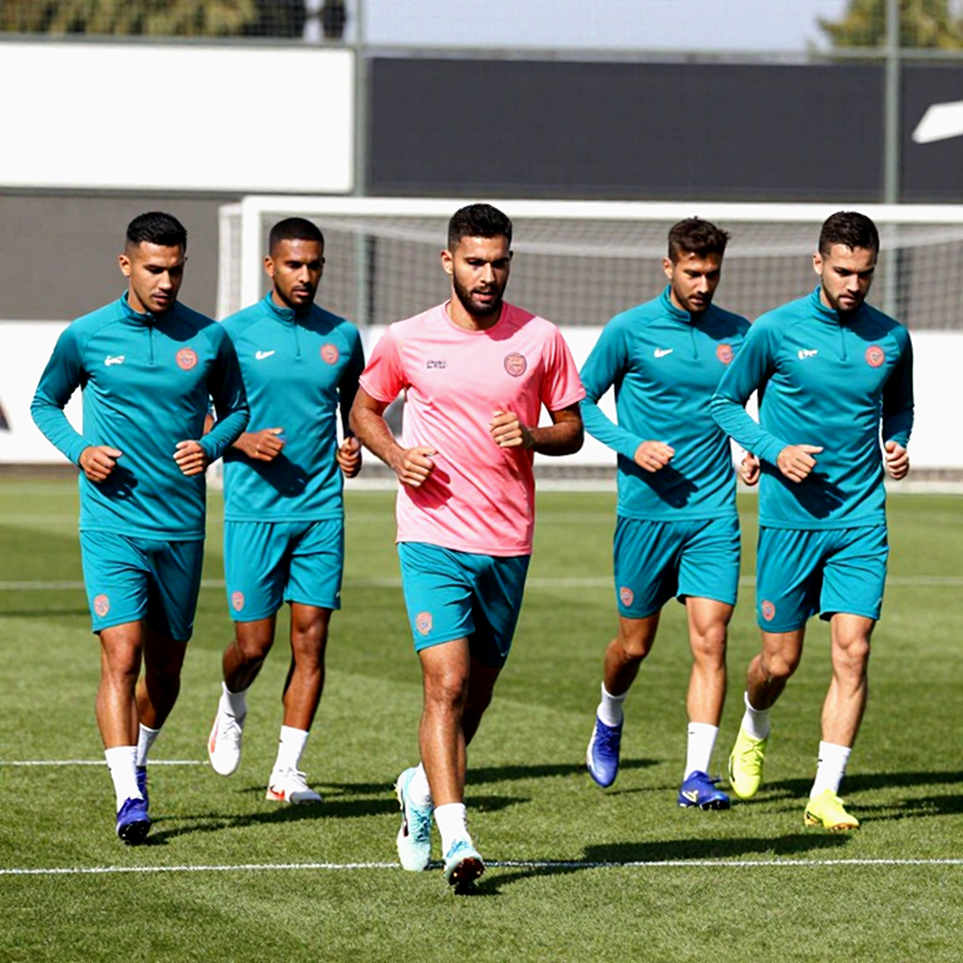
It is also worth noting that neither coach gave a public account afterwards. When the central controversy of a match is the dismissal of both managers, the absence of both principals from the record is a significant gap. Readers are entitled to know what the coaches believe happened, what the referee told them, and whether they accept the decisions.
The tackle, the brawl and the cap
The confrontation began with a tackle. A firm challenge during the match brought players from both sides together. The situation escalated to the point that people came off the benches towards the touchline, and the referee responded by sending both coaches away.
In the middle of that sequence came the detail that genuinely distinguishes this match. A player pulled a cap off the head of a member of the opposing bench and threw it back towards that bench. It is a gesture rarely seen in football, and for that reason it became the most memorable image of the evening.
This detail is recorded through the eyes of reporters and spectators close to the incident. Whether it appears in any official match report is unclear. No statement from the referee refers to it. The cap is therefore simultaneously the most shareable element of the match and the least documented.
Why the cap matters
Not every incident on a football pitch matters for the same reason. A tackle matters for its severity — whether it was dangerous, whether it caused injury, whether it drew a red card. A cap pulled off a head matters not for injury but for symbol. It shows that the tension of the match had reached a point where players were crossing the lines of protocol and mutual respect.
That is why it is strange to find the detail buried in the middle of a match report, well below the headline. The headline went with the two dismissals, which is the safest choice any newsroom can make because it is a neutral, technical fact. But the thing that separates this match from a dozen other ill-tempered fixtures is the cap. It belonged in the first paragraph.
One voice from the winning dressing room
Only one player spoke publicly after the match: Bodø/Glimt captain Patrick Berg, who spoke to TV2. That is pool access from the broadcaster — the same interview available to every outlet, not original reporting.
Berg's message, in substance, was that his side kept control of itself and got the result. He was the winning captain, and on such occasions the winning captain is expected to speak for his team.
But that is where a serious imbalance appears. This match produced a mass confrontation, two dismissals, and a player pulling a cap off a member of the opposing bench. When only the winning captain speaks afterwards, the report becomes one-sided by construction. There is no Viking player, no Viking coach, no club spokesperson. There is no account from either dismissed manager. There is no account from the referee. Every central figure in the controversy is silent, and the only voice belongs to the team that lost least from it.
Second half: no goals, same tension
The second half produced no goals. After five in the first, that was expected — both sides had read each other, and a one-goal margin mattered enormously to both. For Bodø/Glimt, holding 3-2 was a win. For Viking, losing 3-2 was enough to stay top, because goal difference would remain level.
The second half was not only about goals. After the confrontation the mood of the match had changed. Players on both sides looked more cautious and more aggressive at once. Several firm tackles went in, some given as fouls and some waved away. In that atmosphere the next red card could have come at any moment, which is why the closing stages stayed tense.
The table arithmetic
The table after the match is one of the more interesting parts of this story. Bodø/Glimt and Viking are level on points. They are level on goal difference. On paper there is no gap between first and second place.
In that situation Viking remain top, and the reason is head-to-head record. Viking beat Bodø/Glimt 3-0 earlier in the season. When two teams are level on points and goal difference, Norwegian league rules prioritise the head-to-head result. That is why a 3-2 defeat did not dislodge Viking from first place.
One clarification is needed: the rule is not quoted directly in this report; it is inferred from the table outcome. Readers unfamiliar with the league regulations should have been told the tiebreak order explicitly. Nor is it stated how many rounds remain, or whether Bodø/Glimt have a game in hand. Those two pieces of information are the most important part of the whole story, because level points do not mean equal claim in every scenario.
What it means for the title race
Friday's result is strange in that it settled nothing. The winners gained no advantage. The losers lost nothing. Both teams stand exactly where they stood before the match, with fewer fixtures left.
Results like that sharpen a title race. When two teams are close enough that one match changes nothing in the table, every remaining fixture becomes decisive. What starts to matter more than winning or losing is who beats whom by how many goals, because goal difference is now directly part of the tiebreak.
For that reason the defeat is not bad for Viking, but the win is not especially good for Bodø/Glimt. Each side left the other where it found it. Over the coming weeks, as the two clubs play on different pitches, it will become clear who benefits from the parity.
What comes next for both clubs
The most immediate question for Bodø/Glimt is Knutsen. If the disciplinary committee imposes a ban, the team will play several fixtures without him on the touchline. That is a significant blow for a side that depends on every point in a title race.
For Viking the question is Jensen, and a second question besides: how the team handled surrendering a two-goal lead. Conceding three goals after going 2-0 up is a defensive problem, and it should concern a side sitting top of the table.
Both clubs must now show that Friday's tension was confined to one match. If disciplinary action follows and bans are imposed, this will not be remembered as a dramatic scoreline but as the night that changed the direction of a season.
What this report does not contain
Professional journalism should also state what is missing. The goal minutes for Haugen and Botheim are not recorded here. Without the timing of two of the five goals, the full sequence of the match cannot be described precisely. That information should be taken from the official match sheet.
Second, it is not clear whether Viking should be described as reigning champions. If they are, the report should say when they won the title. That is basic context for a title-race story.
Third, the claim that both clubs are competing in this season's Champions League league phase is presented without a source. Two Norwegian clubs in the league phase simultaneously is a notable claim, and it frames the entire story. It should be verified against the competition's official club list.
Fourth, the adjective used to describe the tackle is itself contested. Whether the challenge was dangerous, reckless or merely firm is a decision for the referee, and the report cites no referee, no VAR reference and no disciplinary outcome. Reaching a conclusion about its severity would be premature.
Fifth, the disciplinary consequences for both coaches were unresolved at the time of writing. This story is not finished, and reading it as finished would be a mistake.
Conclusion
The evening at Aspmyra was a reminder of the version of football in which the result is the least interesting thing. Five goals, two coaches dismissed, a cap thrown across the pitch — and at the end the table was exactly where it started.
What makes the match worth remembering is not the 3-2. It is that the two teams were so close that even a dramatic win changed nothing. And it is that the full account of what happened that evening may never be assembled, because none of the people who should have been asked chose to speak.